Why Gemstone Prices Differ | Complete Buying Guide
Discover why gemstone prices vary so much. Learn how rarity, quality, origin, treatments, certification, and market demand affect gemstone value before making your next purchase.
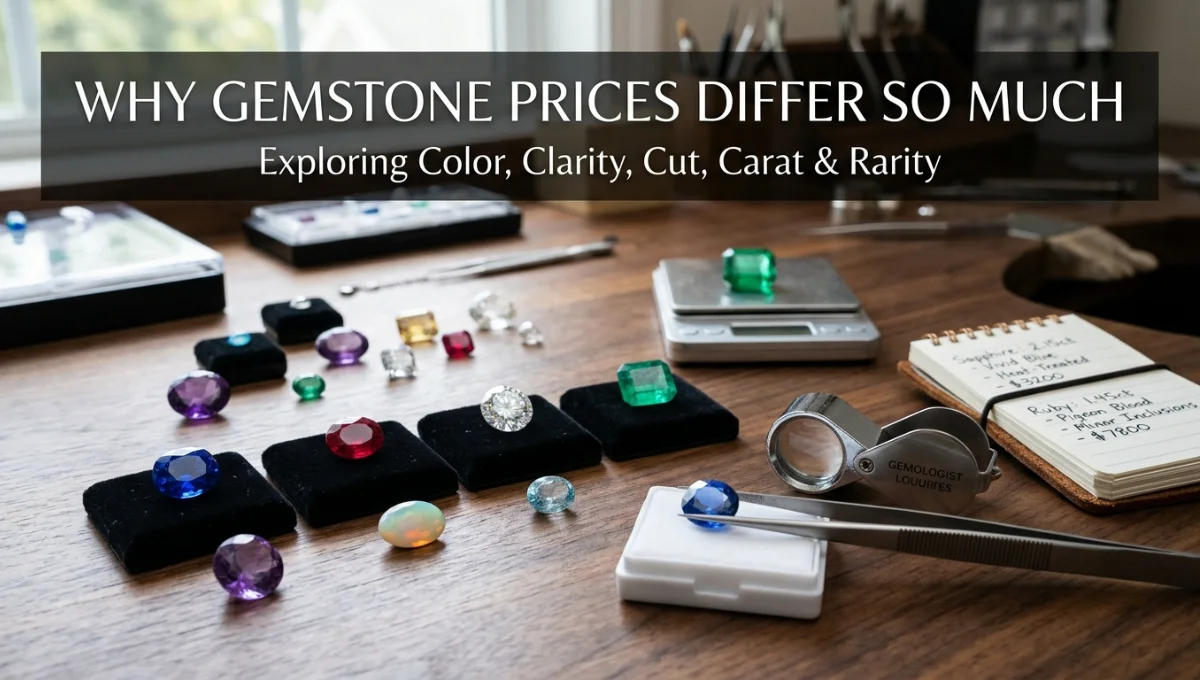
Why Gemstone Prices Differ
Buying a gemstone can be exciting, but it can also be confusing. One of the most common questions I hear from customers is:
“Why does one gemstone cost ₹2,000 while another that looks almost identical costs ₹2,00,000?”
At first glance, many gemstones appear similar in color, size, or shine. However, after years of working with natural gemstones, I have learned that a gemstone’s price is determined by much more than its appearance.
Whether I am purchasing a gemstone for astrology, jewelry, healing, or investment, understanding what affects its value helps me make better decisions and avoid paying for something that doesn’t match its true worth.
In this guide, I’ll explain the major factors that influence gemstone pricing so you can shop with confidence and make informed choices.
There Is No Fixed Price for Every Gemstone
Unlike products that have a standard retail price, gemstones are natural creations. Every stone is unique.
Even two gemstones of the same variety can differ significantly in:
- Color
- Clarity
- Origin
- Weight
- Cut
- Treatment
- Rarity
That’s why gemstone prices can vary from a few thousand rupees to several lakhs.
1. Rarity Is the Biggest Price Factor
The rarer a gemstone is, the more valuable it usually becomes.
Some gemstones are found in only a few locations worldwide, making them difficult to source. Limited availability naturally increases demand and price.
For example:
- Fine-quality emeralds are rarer than commercial-grade emeralds.
- Natural rubies with vivid color are much less common than lower-grade stones.
- Untreated sapphires are generally more valuable than treated ones.
Whenever I evaluate a gemstone, rarity is one of the first aspects I consider.
2. Color Greatly Influences Value
Color is often the first thing people notice, and it plays a major role in pricing.
When assessing color, I look at three factors:
Hue
The gemstone should display its primary color clearly.
Tone
A medium to medium-dark tone is often the most desirable for many gemstones.
Saturation
Rich, vibrant colors without appearing artificial are generally more valuable.
A gemstone with exceptional color can command a much higher price than another stone of similar size.
3. Clarity Matters More Than Many Buyers Realize
Natural gemstones often contain tiny internal features known as inclusions.
These inclusions formed naturally over millions of years.
I don’t automatically reject a gemstone because of inclusions. Instead, I evaluate:
- Visibility
- Position
- Impact on beauty
- Effect on durability
Gemstones with fewer visible inclusions are generally priced higher because they are rarer.
4. Carat Weight Affects Pricing
Many buyers assume that doubling the size doubles the price.
That isn’t always true.
Large, high-quality gemstones are much harder to find than smaller ones.
For example:
- A 2-carat gemstone is not simply twice the price of a 1-carat gemstone.
- Premium large stones may cost several times more because of their rarity.
This is why price increases exponentially rather than proportionally.
5. The Origin of a Gemstone Can Increase Its Value
Where a gemstone comes from can significantly influence its price.
Certain regions are renowned for producing gemstones with exceptional quality.
For instance, some mines have developed reputations for producing stones with outstanding color, clarity, or historical significance.
However, origin alone should never be the only factor when buying. I always evaluate the gemstone’s overall quality first.
6. Natural vs. Treated Gemstones
Not every gemstone sold in the market is completely untreated.
Many gemstones undergo treatments to improve:
- Color
- Clarity
- Appearance
Common treatments include:
- Heat treatment
- Fracture filling
- Dyeing
- Oiling
A natural untreated gemstone is generally rarer and therefore more valuable than a treated gemstone of similar appearance.
This is one reason why certification is so important.
7. Certification Adds Confidence
Whenever I purchase a valuable gemstone, I prefer one that comes with certification from a recognized gemological laboratory.
A certificate typically confirms:
- Gemstone identity
- Natural or synthetic origin
- Any treatments
- Weight
- Basic quality details
While certification may slightly increase the purchase cost, it provides confidence and transparency.
8. Quality of the Cut
Cutting is both a science and an art.
A well-cut gemstone reflects light beautifully and showcases its natural color.
Poor cutting may result in:
- Reduced brilliance
- Uneven appearance
- Light leakage
- Lower overall value
Even if two gemstones share similar quality, the better-cut stone often commands a higher price.
9. Supply and Market Demand
Gemstone prices also fluctuate based on market demand.
Factors influencing demand include:
- Jewelry trends
- Fashion
- Astrological popularity
- Limited mining production
- Global supply chain conditions
When demand increases and supply decreases, prices naturally rise.
10. Ethical Sourcing and Trusted Sellers
I believe buying from a trusted gemstone dealer is just as important as choosing the gemstone itself.
Reputable sellers invest in:
- Quality sourcing
- Certification
- Customer education
- Transparent pricing
- After-sales support
While ethically sourced, certified gemstones may cost more initially, they often provide better long-term value and peace of mind.
Common Mistakes I Avoid When Comparing Prices
Over time, I have learned that price alone should never determine a gemstone’s value.
Here are mistakes I avoid:
- Buying solely because it’s cheap
- Ignoring certification
- Comparing only by size
- Assuming brighter color means higher quality
- Overlooking treatments
- Purchasing from unknown sellers
A lower price isn’t always a better deal if the gemstone lacks authenticity or transparency.
How I Choose a Gemstone Wisely
Before making any purchase, I ask myself a few simple questions:
- Is the gemstone natural?
- Has it been treated?
- Is it certified?
- Does the price reflect its quality?
- Is the seller trustworthy?
- Does it suit my purpose?
Answering these questions helps me make confident, informed decisions instead of emotional purchases.
Final Thoughts
Understanding why gemstone prices differ has completely changed the way I evaluate gemstones.
I no longer judge a stone by its appearance alone. Instead, I consider its rarity, color, clarity, carat weight, origin, treatments, certification, cut, and the reputation of the seller. These factors work together to determine the true value of a gemstone.
At GemsByRax, I believe every customer deserves honest guidance, transparent pricing, and the knowledge needed to make informed choices. Whether you’re buying a gemstone for astrology, jewelry, or as a collector, understanding these pricing factors will help you invest with confidence.
Have you ever found two gemstones that looked almost identical but had completely different prices? Which factor surprised you the most after reading this guide? I’d love to hear your thoughts!
Frequently Asked Questions (FAQs)
1. Why do two gemstones of the same type have different prices?
The price depends on several factors, including color, clarity, carat weight, rarity, origin, treatments, cut quality, and certification. Even gemstones of the same variety can differ significantly in value.
2. Are untreated gemstones always more expensive?
In many cases, yes. Untreated natural gemstones are generally rarer than treated stones, making them more valuable. However, the overall quality of the gemstone also plays an important role.
3. Does a larger gemstone always cost more?
Yes, but not in a simple linear way. Large, high-quality gemstones are much rarer, so their prices often increase exponentially rather than proportionally.
4. How important is gemstone certification?
Certification is highly recommended because it verifies the gemstone’s identity, origin, and any treatments. It helps buyers make informed purchasing decisions with greater confidence.
5. Can treated gemstones still be valuable?
Yes. Many treated gemstones are beautiful and suitable for jewelry. Their value depends on the type of treatment, overall quality, and market demand.
6. How can I make sure I’m paying a fair price?
Buy from a trusted gemstone dealer, request a certification from a recognized laboratory, compare quality rather than just size or appearance, and ask questions about the gemstone’s origin, treatments, and characteristics before making your purchase.