Natural vs Synthetic Gemstones
Natural vs Synthetic Gemstones | Complete Buying Guide
Learn the difference between natural and synthetic gemstones. Discover how they are made, how to identify them, their value, and which one is the right choice for you.
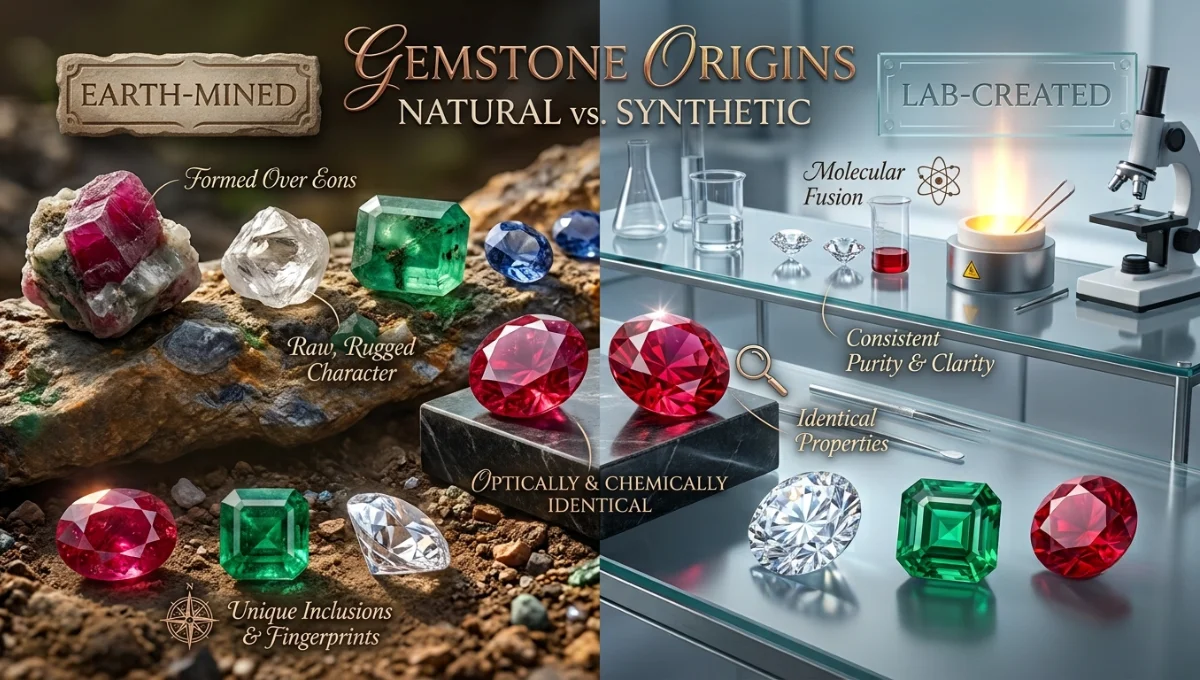
Natural vs Synthetic Gemstones
When I first started learning about gemstones, I believed that every sparkling ruby, sapphire, or emerald found in a jewelry store was naturally formed inside the Earth. As I gained more knowledge and experience, I discovered that many gemstones available today are actually created in laboratories.
This realization led me to ask an important question:
“What is the difference between a natural gemstone and a synthetic gemstone?”
If you’ve ever had the same question, you’re not alone. Many buyers find it difficult to understand why two gemstones can look almost identical but have completely different prices and values.
In this guide, I’ll explain the key differences between natural and synthetic gemstones, their advantages and limitations, and how I choose the right gemstone based on my needs. My goal is to help you make an informed purchase with confidence.
What Is a Natural Gemstone?
A natural gemstone is formed by nature without human intervention. These stones develop deep inside the Earth over millions of years under intense heat and pressure.
Each natural gemstone is unique. No two stones are exactly alike because nature creates subtle differences in color, inclusions, and crystal patterns.
Some popular natural gemstones include:
- Ruby
- Sapphire
- Emerald
- Diamond
- Topaz
- Garnet
- Amethyst
- Aquamarine
Their rarity and natural origin are among the reasons they are highly valued.
What Is a Synthetic Gemstone?
A synthetic gemstone is created in a laboratory using advanced technology that replicates the natural conditions under which gemstones form.
One common misconception is that synthetic gemstones are fake.
They are not fake.
In fact, synthetic gemstones usually have the same chemical composition, crystal structure, and physical properties as natural gemstones. The biggest difference is where and how they are formed.
Instead of taking millions of years to develop underground, synthetic gemstones can be produced in laboratories within weeks or months.
Natural vs Synthetic Gemstones: Key Differences
Understanding the differences helps me choose the right gemstone for my purpose.
| Feature | Natural Gemstones | Synthetic Gemstones |
|---|---|---|
| Formation | Naturally formed inside the Earth | Created in laboratories |
| Rarity | Rare | Easily produced |
| Price | Usually higher | More affordable |
| Inclusions | Natural internal features | Often cleaner and more flawless |
| Investment Value | Generally higher | Usually lower |
| Uniqueness | Every stone is unique | Multiple stones can look nearly identical |
Although they may appear similar, their origin significantly influences their value and pricing.
Why Are Natural Gemstones More Expensive?
Many buyers wonder why natural gemstones often cost much more than synthetic ones.
In my experience, several factors contribute to their higher value:
1. Limited Supply
Natural gemstones are finite resources. Mining high-quality stones requires significant effort, time, and investment.
2. Millions of Years of Formation
Nature cannot be rushed.
Natural gemstones develop over millions of years, making them incredibly rare compared to laboratory-created alternatives.
3. Unique Characteristics
Every natural gemstone has its own fingerprint.
Tiny inclusions, growth patterns, and color variations make each stone one of a kind.
4. Higher Collector and Investment Value
Because of their rarity, natural gemstones often hold greater long-term value, especially when they are untreated and certified.
Advantages of Natural Gemstones
When I choose a natural gemstone, I appreciate several benefits:
- Naturally formed over millions of years
- Unique appearance
- Higher rarity
- Better long-term value
- Suitable for collectors
- Widely preferred for astrological purposes
- Greater emotional and sentimental value
For many buyers, the story behind a natural gemstone is just as meaningful as its beauty.
Advantages of Synthetic Gemstones
Synthetic gemstones also have their own advantages.
I may choose a synthetic gemstone when:
- I have a limited budget.
- I want a gemstone with excellent clarity.
- I need a durable stone for everyday jewelry.
- I prefer a visually flawless appearance.
Their affordability makes them an attractive option for fashion jewelry and decorative pieces.
Can I Identify the Difference Myself?
Many people believe they can identify a natural gemstone simply by looking at it.
In reality, it isn’t always that easy.
Some synthetic gemstones closely resemble natural stones, making visual identification difficult.
Professional gemologists use specialized tools such as:
- Microscopes
- Refractometers
- Spectroscopes
- Polariscopes
These instruments help determine whether a gemstone is natural or laboratory-created.
For this reason, I always recommend purchasing gemstones with certification from a reputable gemological laboratory.
Are Synthetic Gemstones Fake?
This is one of the biggest myths in the gemstone industry.
The answer is No.
Synthetic gemstones are real gemstones created under controlled laboratory conditions.
However, they should never be sold as natural gemstones.
Transparency is essential. A trustworthy seller should clearly disclose whether a gemstone is natural, synthetic, or treated.
Which One Should I Choose?
The right choice depends on my purpose.
I Prefer Natural Gemstones If:
- I value rarity.
- I want a unique stone.
- I’m buying for long-term value.
- I prefer naturally formed minerals.
- I want a certified gemstone for astrology or collecting.
I Consider Synthetic Gemstones If:
- I have a limited budget.
- I want a gemstone mainly for jewelry.
- I prefer a flawless appearance.
- I don’t mind laboratory creation.
There is no universally “better” option. The best choice depends on my priorities and expectations.
Common Mistakes I Avoid
Whenever I buy a gemstone, I avoid these common mistakes:
- Assuming every expensive gemstone is natural.
- Believing synthetic gemstones are fake.
- Ignoring certification.
- Buying without asking about treatments.
- Comparing gemstones based only on appearance.
- Purchasing from sellers who are not transparent.
These simple precautions help me make informed decisions and avoid costly disappointments.
Why Certification Matters
Certification provides confidence and transparency.
A gemstone certificate can verify:
- Whether the gemstone is natural or synthetic.
- Any treatments performed.
- Weight and measurements.
- Basic quality characteristics.
Whenever I invest in a valuable gemstone, certification is one of my top priorities.
Final Thoughts
Understanding the difference between natural and synthetic gemstones has completely changed the way I shop for gemstones.
Instead of judging a stone solely by its beauty, I now consider its origin, rarity, certification, purpose, and overall value. Both natural and synthetic gemstones have their place in the market, but knowing exactly what I am buying allows me to make confident and informed decisions.
At GemsByRax, I believe honesty and education are just as important as offering beautiful gemstones. My goal is to help every customer understand their options so they can choose a gemstone that truly matches their needs, preferences, and budget.
If you had to choose between a rare natural gemstone and a flawless synthetic gemstone, which one would you pick—and why? I’d love to hear your thoughts!
Frequently Asked Questions (FAQs)
1. What is the main difference between natural and synthetic gemstones?
Natural gemstones are formed by nature over millions of years, while synthetic gemstones are created in laboratories using processes that replicate natural conditions.
2. Are synthetic gemstones real gemstones?
Yes. Synthetic gemstones have the same chemical composition and crystal structure as their natural counterparts. The main difference is their origin.
3. Why are natural gemstones more expensive?
Natural gemstones are rarer, take millions of years to form, and require mining. Their limited supply and uniqueness contribute to their higher value.
4. How can I identify whether a gemstone is natural or synthetic?
Visual inspection alone is often not enough. The most reliable method is to purchase a gemstone with certification from a recognized gemological laboratory or consult a qualified gemologist.
5. Which type of gemstone is better for jewelry?
Both natural and synthetic gemstones are suitable for jewelry. The choice depends on your budget, preferences, and whether you prioritize rarity or affordability.
6. Should I always ask for a gemstone certificate?
Yes. A certificate provides important information about the gemstone’s identity, origin, treatments, and quality, helping you make an informed purchase with confidence.